


 All news is rigorously fact-checked and reviewed by leading blockchain experts and seasoned industry insiders.
Table of Contents
What is Stellar (XLM)? An Introduction
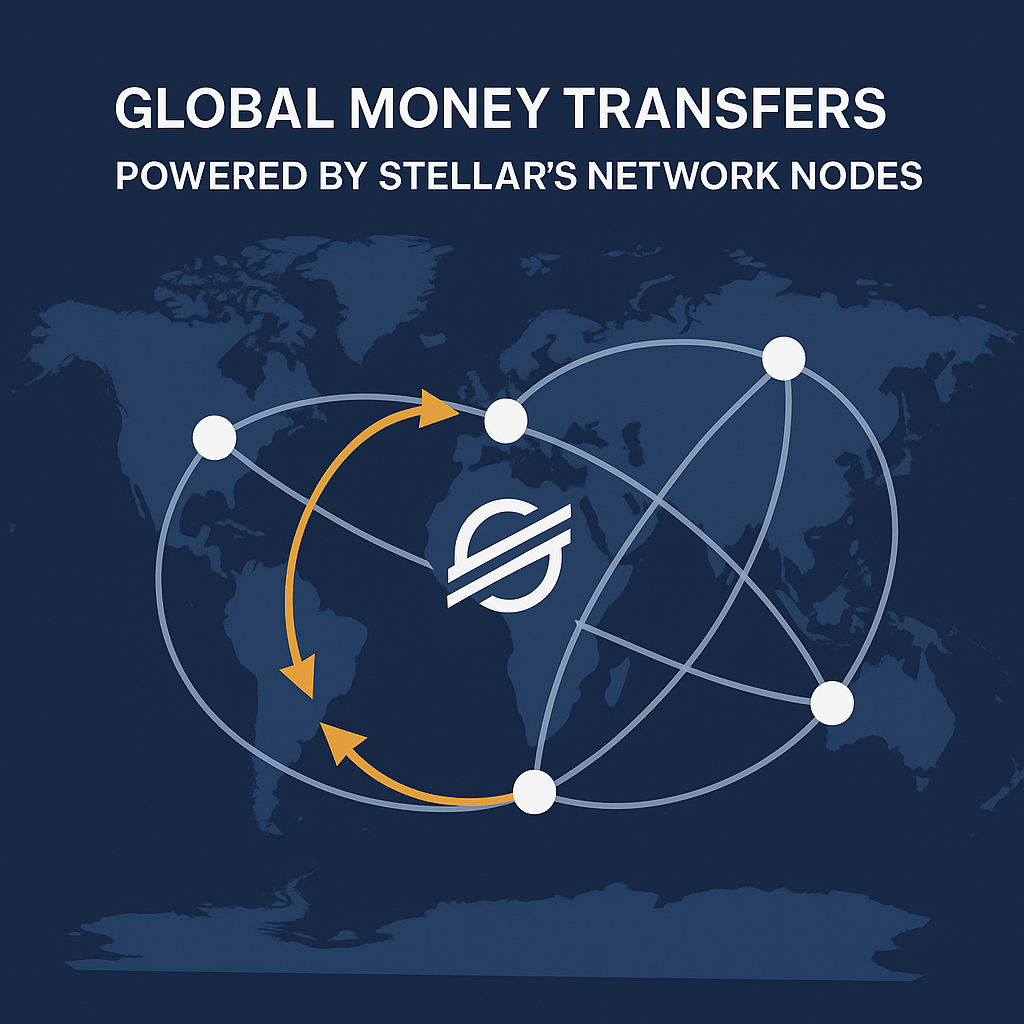
Stellar is a public blockchain network designed for fast and affordable cross-border payments. It addresses real-world payment challenges through minimal fees, near-instant settlement, open APIs, and low energy usage. Its native unit, Lumens (XLM), acts as a bridge between fiat and crypto. Typical applications include remittances, financial infrastructure, and direct payouts by banks, fintechs, and NGOs.
How Stellar Started and Its Early Mission
Stellar was founded in 2014 by Jed McCaleb, a former Ripple co-founder, and lawyer Joyce Kim. It is driven by the non-profit Stellar Development Foundation, which develops the protocol, reference implementations, and ecosystem. Its mission is financial inclusion, with a focus on enabling fair access to global payments through open standards, open-source code, low fees, and partnerships with local providers. Early projects in emerging markets involved fintech startups and developer pilots.
Inside the Stellar Technology: Simple but Powerful
At its core is the Stellar Consensus Protocol, a federated consensus model without energy-heavy mining. Ledgers close within seconds, and fees are fractions of a cent. Each account requires a minimum balance as an anti-spam measure. XLM also acts as a bridge when two currencies lack a direct exchange path.
For developers, Stellar offers SDKs, multi-signatures, path payments, and asset issuance. With Soroban, smart contracts expand Stellar’s functionality into programmable payments and DeFi. Trustlines determine which tokenized assets an account can hold. Anchors integrate local payment systems and provide fiat on- and off-ramps.
Key Partnerships and Real-World Pilots
The power of Stellar becomes clear through integrations with payment providers, banks, and NGOs. IBM used Stellar for cross-border settlement pilots via World Wire. MoneyGram developed on/off-ramps to convert crypto into cash or bank deposits. NGOs piloted aid disbursement, sending funds directly to mobile devices. Banks and PSPs rely on Stellar for remittances and treasury management, reducing reliance on correspondent banks.
| Partner | Use Case |
|---|---|
| IBM World Wire | Cross-border payment pilots |
| MoneyGram | On- and off-ramps for crypto-to-fiat |
| NGOs | Direct relief payments and micropayments |
| Banks / PSPs | Remittances and treasury settlements |
| Stablecoin Issuers | Asset issuance on the Stellar network |
Everyday Use Cases of Stellar
For international remittances, Stellar offers a cost-effective alternative to SWIFT, particularly for small transfers. Micropayments and donations benefit from low fees and fast settlement. NGOs use Stellar for direct humanitarian assistance. Stablecoins such as USDC run on Stellar, enabling digital dollar transfers in seconds. E-commerce merchants can accept payments with real-time confirmation and automated reconciliation.
XLM Tokenomics in a Nutshell
The native token is Lumens (XLM). Originally, 100 billion units were issued, later reduced to about 50 billion via a major burn. No new XLM is created on a regular basis. XLM covers transaction fees, acts as a bridge asset, and secures accounts against spam through minimum balance requirements.
Chart: XLM Token Supply History, Circulating Supply & Use Cases
| Category | Details |
|---|---|
| Initial Supply (2014) | 100 billion XLM created at launch |
| Burn Event (2019) | Over 50 billion XLM burned, reducing total supply significantly |
| Current Total Supply | ~50 billion XLM |
| Circulating Supply (2025) | ~28 billion XLM in active circulation |
| Use Case 1 | Transaction fees – every operation requires a small XLM fee |
| Use Case 2 | Bridge currency – facilitates exchange between fiat and crypto |
| Use Case 3 | Anti-spam mechanism – minimum balances prevent network abuse |
| Use Case 4 | Asset issuance – supports tokenized assets and stablecoins like USDC |
Wallets: How You Hold and Use XLM
Custodial vs. non-custodial at a glance
| Wallet Type | What You Control | Ease of Use | Common Use Case |
|---|---|---|---|
| Custodial | Provider holds keys on your behalf | Very simple | Quick on-ramps, occasional transfers |
| Non-custodial (software) | You hold your keys | Simple once set up | Everyday payments, swaps |
| Non-custodial (hardware) | You hold your keys offline | More steps | Longer-term holding with usage flexibility |
Popular wallet formats
| Format | Typical Benefits | Ideal For You If |
|---|---|---|
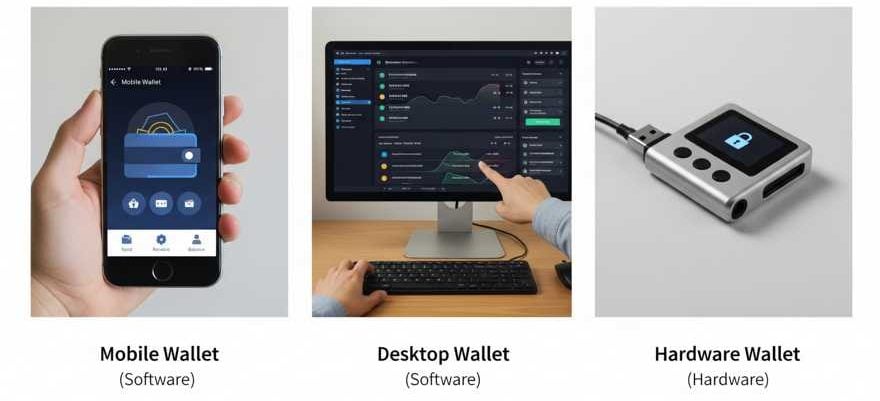
| Mobile app | Always-on access, clean UI | You want instant payments on the go |
| Desktop wallet | Full-screen control, detailed tools | You prefer managing finances on a computer |
| Hardware wallet | Offline key storage | You hold larger balances and want device-based confirmation |
Editor’s tip: For a smooth start, use a reputable mobile wallet to learn the basics—then pair it with a hardware wallet when you’re ready to hold larger balances. This two-tier approach delivers convenience day to day and extra peace of mind for funds you rarely move.
Sending Money: A Step-by-Step Example
You can send XLM as easily as sending an email. Here’s a simple flow you’ll follow in most wallets:
- Open your wallet. Make sure you have a small XLM balance to cover fees.
- Select ‘Send’. Paste the recipient’s Stellar address (or scan a QR code).
- Choose the asset. XLM for simplicity; tokens if you and the recipient use the same anchor.
- Enter the amount. You can often set it in XLM or in a local-currency equivalent.
- Review and confirm. Check the address and fee, then approve.
- Done. The recipient sees funds in seconds.
Common touches you’ll notice: QR codes for easy addressing, human-readable memos on some transfers, and a live confirmation screen so you can watch your transaction finalize almost immediately.
Fees, Speed, and Practical Details
Stellar is engineered for low-latency, low-cost transfers, which makes it feel responsive for everyday usage. While exact figures vary by market conditions, you’ll find the experience consistent: low fees, rapid confirmation, and minimal friction between steps.
| Metric | What You Can Expect | Why It Matters |
|---|---|---|
| Typical confirmation time | Seconds | Funds arrive quickly; you move on with your day. |
| Network fee per transfer | A fraction of a cent | You can make frequent small payments without worrying about costs. |
| Cross-asset swaps | In-wallet, fast execution | You can switch assets as needs change. |
XLM vs. Other Payment-Focused Networks
Here’s a quick comparison that helps you position Stellar in your mental map of digital money networks:
| Network | Primary Focus | Typical Fees | Typical Speed | Programmability |
|---|---|---|---|---|
| Stellar (XLM) | Everyday payments & asset transfers | Very low | Seconds | Smart contracts via Soroban |
| XRP Ledger | Cross-border settlement | Low | Seconds | Programmability via native features & extensions |
| Bitcoin (on-chain) | Store of value, settlement | Variable | Minutes | Limited on-chain |
Recent Developments & Future Outlook
By 2025, Stellar payments are becoming more regulated. Payment providers integrate fiat ramps, stablecoin solutions expand, and pilot programs in developing economies are scaling up. Governments, NGOs, fintechs, and banks are building infrastructures for cash assistance, remittances, and payouts. Stellar remains a key tool to provide fast, transparent, and accessible global financial flows.
