



 All news is rigorously fact-checked and reviewed by leading blockchain experts and seasoned industry insiders.
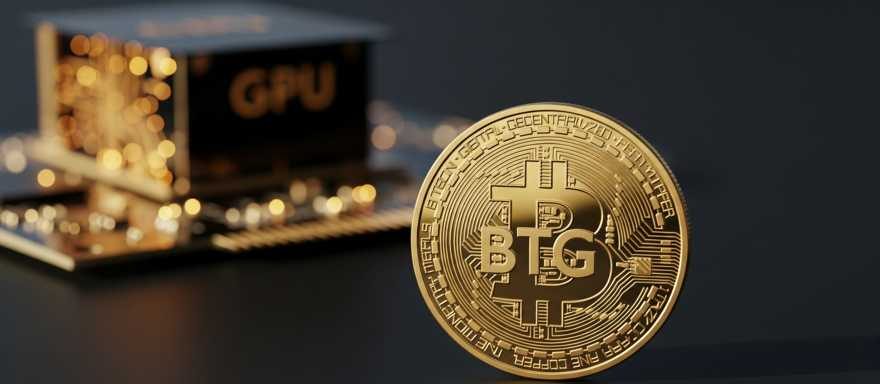
Bitcoin Gold (BTG) is a user-friendly Bitcoin fork focused on keeping mining open to everyday GPU hardware while preserving the familiar peer-to-peer payment experience.
What Is Bitcoin Gold?
Bitcoin Gold is a community-driven cryptocurrency that split from Bitcoin in 2017 to broaden participation in securing the network. You still send and receive value across a public blockchain, but BTG emphasizes mining with graphics cards (GPUs) rather than specialized ASICs. For you, that means a familiar Bitcoin-like experience—transparent supply, open-source code, and global accessibility—paired with a design goal of wider decentralization in who can help run the network.
Key facts at a glance
- Ticker: BTG
- Origin: Fork of Bitcoin (2017)
- Consensus: Proof of Work using an ASIC-resistant Equihash-family algorithm
- Supply model: Bitcoin-like capped issuance
- Primary use: Peer-to-peer payments and value transfer
How Bitcoin Gold Works — The Essentials
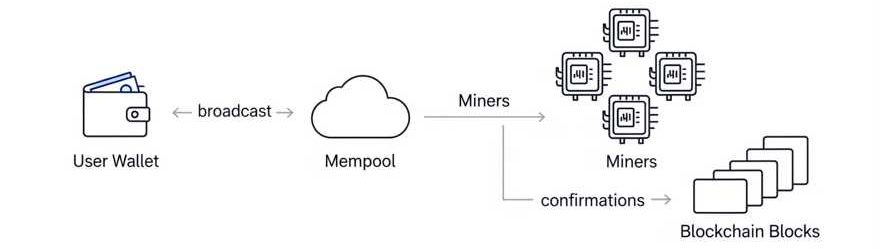
On Bitcoin Gold, new blocks are created through Proof of Work, where miners compete by hashing with GPUs. The network accepts valid blocks and extends the longest chain, just as on Bitcoin. Wallets generate addresses from your private keys; transactions are broadcast, included in blocks by miners, and then become harder to reverse with each confirmation. For day-to-day use, you’ll interact with a wallet app much like you would for Bitcoin—scan a QR code, set a fee, and confirm on-chain.
| Parameter | Bitcoin Gold (BTG) | What it means for you |
|---|---|---|
| Consensus | PoW via Equihash-family (GPU-friendly) | You can mine with consumer GPUs; participation is broadly accessible. |
| Supply model | Capped, Bitcoin-like issuance | Predictable, programmatic issuance schedule familiar from Bitcoin. |
| Transactions | On-chain, UTXO model (Bitcoin-style) | Similar send/receive experience; easy for Bitcoin users to grasp. |
| Wallets | Mobile, desktop, and hardware wallet support varies by provider | Choose a wallet that lets you hold your keys and export standard backups. |
What You Can Do With BTG
- Move value globally: Send BTG to friends, merchants, or your own wallets.
- Hold as a crypto asset: Keep BTG in a wallet you control.
- Participate in mining: Use GPUs to contribute hashpower and earn block rewards if you run mining software and join a pool.
- Pay or get paid: Generate payment requests with QR codes and track confirmations.
Wallets & Storage — Set Up in Minutes
To get started, you’ll pick a wallet that supports BTG. Installation is straightforward and mirrors other major coins. Use a reputable provider, then practice with a small test transaction before moving larger amounts. Keep your backup phrase safely recorded offline so you can restore your wallet on a new device if needed.
Step-by-step: your first BTG wallet
- Install a BTG-compatible wallet on mobile or desktop.
- Create a new wallet; follow the prompts to back up your recovery phrase.
- Set a strong unlock method (PIN, biometrics) inside the app settings.
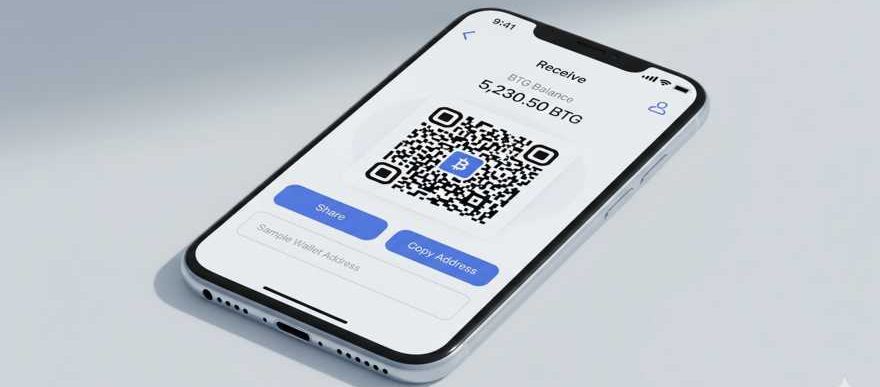
- Tap “Receive” to view your BTG address and QR code.
- Send a small amount of BTG to this address to test your setup.
Buying BTG — The Simple Path
You can acquire BTG through a centralized exchange, peer-to-peer marketplace, or crypto on-ramp that lists the asset. The flow is usually: verify your account with the provider, deposit local currency or crypto, buy BTG at market or limit price, and withdraw to a self-custody wallet you control.
| Route | How it works | Why you’d use it |
|---|---|---|
| Centralized exchange | Create account → deposit fiat/crypto → buy BTG → withdraw | Straightforward buying flow with common order types. |
| Peer-to-peer marketplace | Match with a seller → agree price → transact and settle | Flexible payment methods and one-to-one pricing. |
| Crypto-to-crypto swap | Swap an existing coin you hold into BTG where supported | Convenient if you already hold other assets. |
Sending & Receiving BTG — What to Expect
When you send BTG, you choose a network fee and broadcast the transaction. A miner includes it in a block, creating your first confirmation. Each additional block adds another confirmation. For everyday transfers, you typically wait for a small number of confirmations; for large value, you wait longer. Most wallets present a progress bar or status so you can follow along.
| Scenario | Typical confirmations | What you’ll see |
|---|---|---|
| Small peer-to-peer transfer | 1–2 | Wallet shows “pending” → “confirmed” quickly after inclusion. |
| Everyday merchant payment | 2–3 | Point-of-sale or invoice updates as blocks arrive. |
| Large value transfer | 6+ | More confirmations for stronger finality. |
Mining on BTG — Beginner Overview
If you’re curious about mining, Bitcoin Gold’s GPU-friendly approach lowers the barrier to entry compared with ASIC-centric networks. Practically, you’ll install mining software that supports BTG’s algorithm, point it at a mining pool, and run it on a capable graphics card. The pool aggregates hashpower and pays you proportionally to your contribution when blocks are found. Your main tasks are selecting reliable software, keeping drivers updated, and monitoring performance.
| Mining component | Your action | Outcome |
|---|---|---|
| GPU hardware | Use a modern graphics card with stable power supply | Consistent hashrate during operation |
| Mining software | Install a BTG-compatible miner and configure pool settings | Your work contributes to finding blocks |
| Mining pool | Join a reputable pool that pays out in BTG | Regular payouts to your wallet address |
BTG vs. BTC vs. BCH — A Quick Comparison
All three share a Bitcoin heritage, so your experience moving value from one address to another will feel similar. The differences lie in mining approach, fee dynamics across market cycles, and the broader communities around them. Here’s a high-level view to orient you:
| Feature | BTG | BTC | BCH |
|---|---|---|---|
| Mining hardware focus | GPU-friendly | ASIC-centric | ASIC-centric |
| Supply ethos | Bitcoin-like cap | Hard-capped | Hard-capped |
| User experience | Bitcoin-style UTXO; familiar wallets | Reference standard for UX | Bitcoin-style UX with different throughput choices |
Quick-Start Checklist
- ✅ Choose a BTG-compatible wallet (mobile or desktop).
- ✅ Write down and safely store your recovery phrase.
- ✅ Receive a small amount of BTG to test your setup.
- ✅ Send a low-value transaction to learn the flow.
- ✅ Label your addresses for clarity (e.g., “daily,” “savings”).
- ✅ If curious, try mining with a GPU through a pool (optional).
BTG Transaction Anatomy — From Tap to Confirmation
When you press “send,” your wallet assembles inputs and outputs into a transaction, signs it with your private key, and broadcasts it to nodes. Miners pick up transactions from the mempool and include them in a candidate block. Once a miner publishes a valid block, nodes verify it, and your wallet shows the first confirmation. The process repeats each block, deepening the transaction’s finality.
Fees, Addresses, and Practical Details
Setting a fee you’re comfortable with
Your wallet typically suggests a dynamic fee. You can accept the suggestion or choose a custom fee. Higher fees attract faster inclusion; lower fees may take longer. If time is not critical, you can pick a moderate fee and simply let the wallet update status as blocks arrive.
Understanding addresses
BTG uses a Bitcoin-style address format derived from your wallet’s keys. Most apps present them as an alphanumeric string and a QR code. You can generate new addresses for different purposes—some users create labels for routine spending vs. long-term holding to keep records tidy.
Hands-On: A Simple BTG Workflow You Can Follow
- Install the wallet: Download from the provider’s site or app store.
- Create and back up: Follow the backup prompts in one sitting; verify you can read your phrase.
- Fund your wallet: Acquire BTG via your preferred route and withdraw to your address.
- Practice: Send a small amount to a second wallet or trusted contact; monitor confirmations.
- Organize: Add labels and notes so future you can trace what happened and why.
Common Terms — A Mini-Glossary
| Term | What you need to know |
|---|---|
| Fork | A protocol split creating a new chain with its own rules and coin—here, Bitcoin Gold. |
| UTXO | Unspent Transaction Output; the Bitcoin-style accounting model BTG uses. |
| Confirmation | Each block added after yours; more confirmations mean stronger settlement. |
| Mempool | The waiting area where transactions sit before a miner includes them in a block. |
| Mining pool | A group of miners sharing work and rewards to smooth earnings over time. |
