

 All news is rigorously fact-checked and reviewed by leading blockchain experts and seasoned industry insiders.
As blockchain networks began to scale and evolve, the split between onchain and offchain operations emerged to address key technical and functional limitations.
| Key Fact | Summary |
|---|---|
| Why the Split Exists | Separates trustless settlement (onchain) from fast, flexible operations (offchain) to overcome limited throughput, slow confirmations, and high fees. |
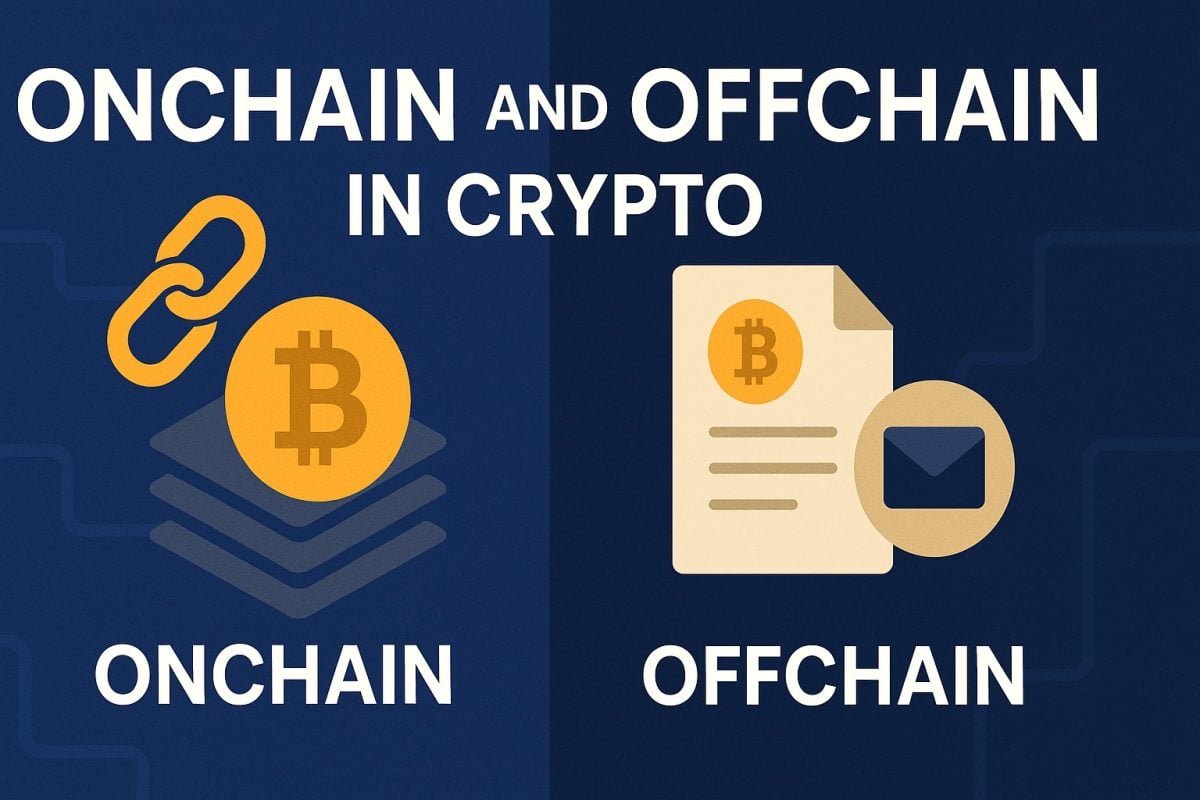
| Onchain — Definition | Execution and validation happen directly on the blockchain; results are immutable, transparent, and replicated across nodes. |
| Offchain — Definition | Transactions/computation occur outside the main chain and are optionally settled onchain, using L1 as the final source of truth. |
| Performance & Cost | Onchain is constrained by block times and gas; offchain interactions are near-instant and typically low-cost until settlement. |
| Security & Finality | Onchain inherits consensus security and finality; offchain security varies (cryptographic proofs, economics, or trusted parties) with disputes resolved onchain. |
| Typical Onchain Uses | Token transfers, smart contract execution (DeFi), DAO voting, NFT minting, and permanent asset/identity registries. |
| Typical Offchain Mechanisms | State channels (e.g., Lightning) for rapid payments, offchain order books for fast matching, and ZK/MPC for heavy computation proved onchain. |
| Rollups as Hybrid | Execute offchain and settle onchain: Optimistic rollups use fraud-proofs and challenge periods; ZK rollups post validity proofs—both reduce gas while inheriting L1 security. |
Why Onchain and Offchain Solutions Were Developed
Blockchains like Bitcoin and Ethereum were built with strong guarantees of decentralization, transparency, and immutability. However, as adoption increased, their limited throughput, slow confirmation times, and high fees became bottlenecks. This led to a critical need for differentiated layers of interaction — giving rise to onchain and offchain architectures.
The goal was to separate essential settlement functions from scalable, fast, and flexible operations. Onchain layers ensure trustless finality. Offchain systems unlock speed, efficiency, and lower costs.
Defining Onchain and Offchain in Blockchain Systems
Onchain Activity Explained
Onchain refers to any operation that is executed, validated, and recorded directly on a blockchain. This includes token transfers, smart contract executions, NFT minting, and governance proposals.
Onchain data is immutable, cryptographically secured, and replicated across all nodes in the network. This is the basis for the public auditability and trustless nature of blockchains.
Offchain Activity Explained
Offchain refers to any transaction or computation that occurs outside the main blockchain network. Offchain operations are not recorded immediately on the ledger, but their outcomes can eventually be settled onchain when needed.
This model allows parties to interact faster and cheaper, while still relying on the blockchain as the ultimate source of truth when disputes or settlement is required.
Key Differences Between Onchain and Offchain
| Feature | Onchain | Offchain |
|---|---|---|
| Execution Location | On the blockchain itself | Outside the blockchain (e.g., side channels, databases) |
| Speed | Slower due to block times and consensus | Near-instantaneous |
| Fees | Network fees (gas) | Typically no fees |
| Security | Secured by blockchain consensus | Security varies by implementation |
| Transparency | Fully transparent and auditable | Private unless committed onchain |
| Use Cases | Token swaps, DeFi, DAOs | Micropayments, messaging, state channels |
Onchain Use Cases in the Crypto World
Smart Contract Execution
All smart contracts are executed onchain. When a user interacts with a DeFi protocol like Aave or Uniswap, their transaction is processed by smart contracts hosted on the Ethereum blockchain. This provides deterministic behavior and global state consensus.
Governance Voting
DAOs rely on onchain voting mechanisms to approve changes in protocol rules, funding allocations, or upgrades. Each vote is cryptographically tied to the wallet of the voter and publicly verifiable.
Permanent Asset Registries
Onchain operations are used to mint and manage NFTs, tokenize real-world assets, or register identities using DID (Decentralized Identifier) protocols. These require the permanence and auditability of a blockchain ledger.
Offchain Mechanisms and Their Implementation
State Channels
State channels are one of the most prominent offchain technologies. They allow two parties to transact privately and rapidly without interacting with the blockchain until they close the channel.
This is ideal for high-frequency, low-value payments, like gaming or tipping services. The Lightning Network is a widely used state channel protocol for Bitcoin.
Offchain Computation (ZK and MPC)
To scale computation without burdening the blockchain, offchain protocols like Zero-Knowledge Proofs (ZKPs) and Multi-Party Computation (MPC) handle complex logic offchain and publish cryptographic proofs onchain.
Protocols like ZK-SNARKs allow Ethereum-based apps to validate computation without executing it on every node.
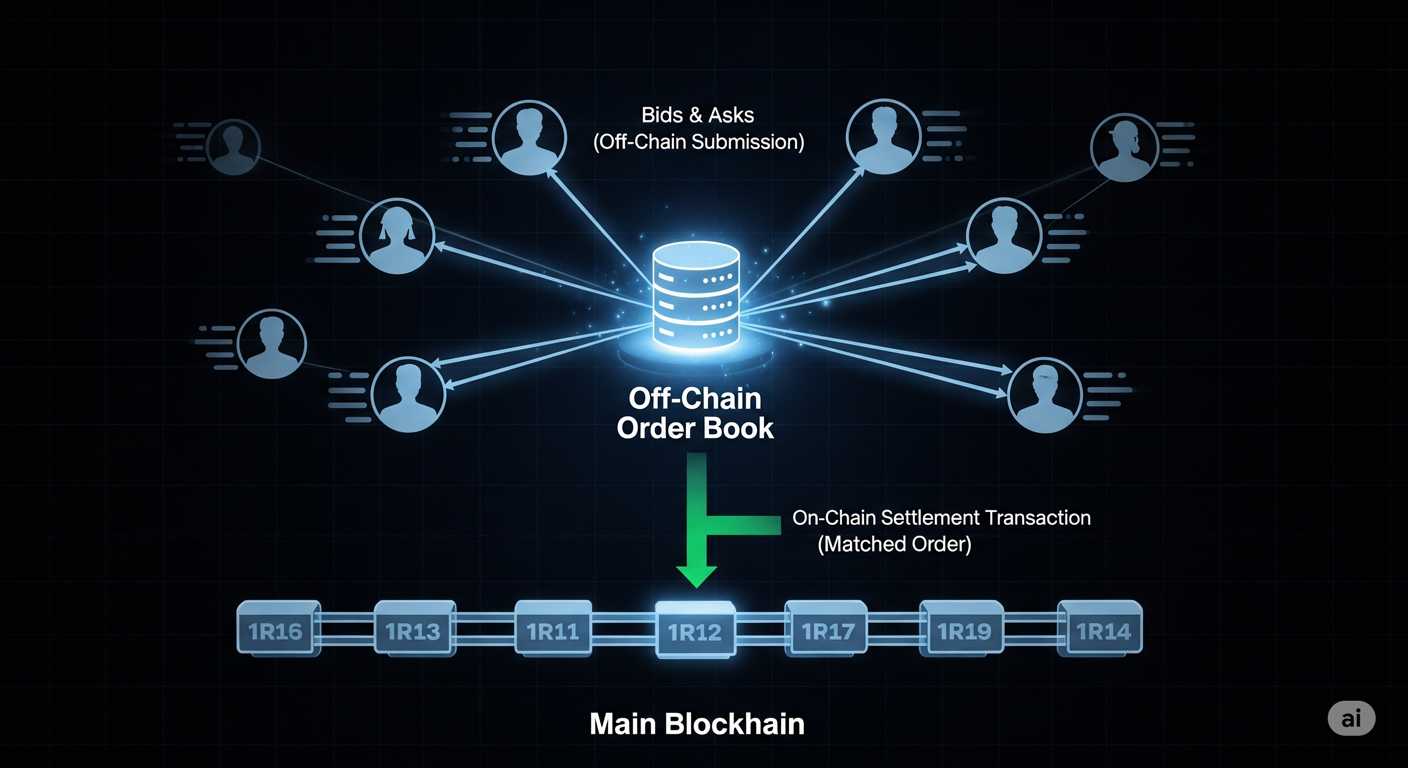
Offchain Order Books
Decentralized exchanges like dYdX or 0x use offchain order books to manage user orders, and only settle the trade onchain when there’s a match. This enables faster and more efficient markets without congesting the blockchain.
Why Offchain Systems Became Critical for Blockchain Scaling
Without offchain components, popular blockchains like Ethereum would be overwhelmed by the sheer volume of user activity. Offchain solutions allow dApps to operate with high responsiveness and lower user costs.
Layer 2 networks like Arbitrum and Optimism use offchain execution paired with onchain settlement, giving rise to the optimistic rollup model.
Offchain designs also support advanced applications like:
- Decentralized gaming with real-time interactions
- Privacy-preserving smart contracts
- Tokenized real estate trading with legal contracts managed offchain
Rollups: The Hybrid Model of Offchain Computation
How Rollups Work
Rollups execute transactions offchain and then submit either proofs (ZK Rollups) or compressed data batches (Optimistic Rollups) to Ethereum for verification and settlement.
This dramatically reduces gas costs and improves throughput without compromising Ethereum’s base-layer security.
Optimistic Rollups assume validity by default and introduce a challenge period. ZK Rollups submit cryptographic validity proofs with every transaction batch.
Examples of Rollup Networks
| Rollup Type | Project | Underlying Tech |
|---|---|---|
| Optimistic | Arbitrum | Rollup + Fraud Proofs |
| Optimistic | Optimism | Optimistic VM (OVM) |
| ZK Rollup | zkSync | ZK-SNARKs |
| ZK Rollup | Starknet | STARK-based Proofs |
Bridges Between Onchain and Offchain
Bridging Protocols
Bridges enable the transfer of tokens or data between onchain and offchain environments, or between different blockchains. These mechanisms often rely on wrapped tokens, lock-and-mint schemes, or validator networks.
For example, sending ETH from Ethereum to zkSync involves locking ETH on L1 and minting the equivalent on L2.
Trusted vs Trustless Bridges
| Bridge Type | Security Model | Example |
|---|---|---|
| Trusted | Managed by centralized or semi-centralized parties | Multichain |
| Trustless | Enforced by smart contracts or zero-knowledge proofs | Hop Protocol |
How Crypto Wallets Interact Onchain vs Offchain
Modern wallets like MetaMask, Rabby, and Phantom act as gateways between users and both onchain and offchain environments.
- Onchain: Signing transactions, sending assets, interacting with smart contracts.
- Offchain: Approving token allowances, message signing for login/authentication, bridging tokens.
Wallets like Rabby display pending state changes before committing them onchain — a user-centric view of offchain simulation.
MetaMask Snap plugins now allow third-party computation or ZK verification offchain before submitting to mainnet.
Digital signatures ensure cryptographic integrity in these wallet-based interactions.
Offchain Data and Oracle Networks
Why Offchain Data is Crucial
Blockchains are deterministic systems. They cannot access external data (like price feeds, weather data, or stock prices) on their own. This creates the need for oracle networks that bring trusted offchain data onchain for smart contract use.
Without offchain oracles, DeFi protocols like lending platforms or synthetic assets would not function.
Decentralized Oracle Networks
The most prominent decentralized oracle protocol is Chainlink. It aggregates data from multiple offchain sources and feeds it into smart contracts via onchain transactions.
Other networks like UMA, Band Protocol, and Pyth are building complementary offchain data systems.
Offchain Governance Systems
Snapshot Voting
Snapshot is an offchain voting system used by many DAOs. It enables token-weighted governance decisions without requiring gas payments.
Users sign messages offchain to vote. Results are stored offchain but honored by onchain contracts when executed. This separation ensures cost-efficiency for communities.
Dispute Resolution Offchain
Protocols like Kleros use offchain juror networks to settle disputes in decentralized applications. Their rulings are then submitted to the blockchain for finality.
Use Cases in Web3 Products
Gaming
Most Web3 games rely on offchain logic for rendering, actions, and progression. Only core milestones (level up, item minting) are submitted onchain to reduce costs.
This hybrid model is essential to providing playable experiences while retaining blockchain-based ownership of assets.
DeFi Platforms
Protocols like dYdX, Perpetual Protocol, and GMX manage trades offchain and post the final state to Ethereum. This includes order book matching, leverage calculations, and liquidation events.
Social and Identity
Projects like Lens Protocol use offchain storage for content, but onchain registries for identity and monetization. This separation preserves decentralization while improving UX.
Auditing Onchain and Offchain Systems
Auditing Onchain Transactions
Onchain data is public and verifiable. Anyone can inspect smart contract code, transaction history, and wallet balances via explorers like Etherscan or Blockchair.
Smart contracts can be audited through tools like MythX, Slither, and CertiK before being deployed on mainnet.
Auditing Offchain Components
Offchain systems require different security models. Auditors examine API integrations, offchain data pipelines, cryptographic proofs, and key management.
Zero-knowledge-based offchain modules are verified using mathematical models. Oracles are assessed based on data redundancy, transparency, and operator trustworthiness.
Cross-Chain Interactions: Beyond a Single Blockchain
Layer 0 Networks and Offchain Relayers
Interoperability protocols like Cosmos and Polkadot operate with relay chains and IBC (Inter-Blockchain Communication) to sync data between different onchain networks using offchain messaging.
Layer 0s use offchain validators to verify messages and finalize them on their target chain. These interactions are foundational to multichain dApps.
Bridge Aggregators and Smart Routing
Bridge aggregators like Li.Fi and Socket route tokens across chains and L2s using offchain route optimization before committing to onchain settlement.
How Onchain and Offchain Interactions Power Stablecoins
Fiat-Collateralized Stablecoins
Stablecoins like USDC, USDT, and BUSD depend on offchain collateral held in bank accounts or custodians. The minting and redemption logic occurs onchain, while the underlying fiat value is managed offchain.
Algorithmic Stablecoins
Other models like DAI rely on smart contracts and oracles to maintain a peg using onchain collateralization ratios. Still, these contracts source offchain price data for their internal logic.
This blend of real-world data and blockchain logic makes stablecoins an ideal example of the onchain/offchain paradigm.
Challenges in Syncing Onchain and Offchain Systems
Latency and Finality Mismatches
Blockchains operate on delayed consensus, while offchain systems may act in real-time. Bridging the two requires managing trust assumptions and potential race conditions.
Replay and Double-Spend Protection
Offchain operations must prevent users from submitting conflicting actions onchain. Mechanisms like nonces, challenge periods, and proof-of-sequence are used to mitigate such risks.
Versioning and Upgradability
Offchain systems can evolve quickly. However, if tied to onchain contracts, any change must maintain compatibility or risk breaking functionality. This is particularly true for zkApps or cross-chain bridges.
Innovations at the Onchain/Offchain Boundary
Intent-Centric Architectures
New protocols focus on user “intents” instead of transactions. An intent can be matched and fulfilled offchain, then settled onchain. This enables higher flexibility and composability across chains.
Projects like Anoma and SUAVE are exploring these models to shift from app-centric to intent-centric DeFi.
Programmable Privacy
Zero-knowledge circuits allow developers to build programmable private actions. These are computed offchain but verified onchain using succinct proofs, allowing data hiding while maintaining public integrity.
When to Use Onchain vs Offchain
| Scenario | Recommended Method |
|---|---|
| Final asset transfer or token mint | Onchain |
| Fast trading or microtransactions | Offchain |
| Private messaging or DAO proposals | Offchain with onchain finalization |
| Collateral liquidation or staking rewards | Onchain |
| Price feeds, external APIs | Offchain with oracles |
| Gaming and user experience logic | Offchain with asset updates onchain |
The Future Role of Hybrid Infrastructure
Composable Stack Models
Crypto infrastructure is trending toward modularity. Protocols are decomposed into execution, settlement, data availability, and application layers — each may operate offchain or onchain depending on use case.
Trusted Execution Environments (TEEs)
Offchain execution in TEEs like Intel SGX or AWS Nitro is gaining traction for confidential computing. These enclaves can process sensitive logic and post results onchain with attestation proofs.
Use cases include privacy wallets, encrypted chat dApps, and permissioned DeFi platforms.
Summary of Core Concepts
| Concept | Onchain | Offchain |
|---|---|---|
| Settlement | Immutable, permanent | Deferred or optional |
| Speed | Slower, limited by block time | Near real-time |
| Cost | Gas fees per transaction | Often free or minimal |
| Transparency | Fully auditable | May be private |
| Security Source | Blockchain consensus | External guarantees (crypto, trust) |
| Ideal For | Finality, public proof | Performance, scalability |
Use This Knowledge to Analyze Projects Smarter
Understanding how protocols split their operations between onchain and offchain layers helps investors, users, and builders assess scalability, decentralization, and security trade-offs.
Whether it’s reading a whitepaper, interacting with a dApp, or evaluating tokenomics — the onchain/offchain framework provides a powerful mental model.