


 All news is rigorously fact-checked and reviewed by leading blockchain experts and seasoned industry insiders.
Stablecoins emerged to solve one of cryptocurrency’s most persistent problems: the extreme volatility that makes digital assets unpredictable for everyday transactions and large-scale financial operations.
Operational Mechanics of Stablecoins
Behind every stablecoin lies a set of operational processes that ensure its peg remains intact. These mechanisms vary based on the design—centralized fiat-backed systems differ significantly from decentralized crypto-collateralized models.
Minting and Redemption
Minting refers to the creation of new stablecoins, usually triggered when users deposit collateral or fiat into the system. Redemption occurs when stablecoins are returned in exchange for the underlying asset.
- In fiat-backed systems, minting happens when a custodian receives a fiat deposit, while redemption involves sending fiat back to the user upon stablecoin burn.
- In crypto-collateralized systems, minting and burning are governed entirely by smart contracts, ensuring overcollateralization ratios are respected.
- In algorithmic models, supply changes are executed automatically via coded rules without direct collateral backing.
Collateral Management
Collateral serves as the foundation for most stablecoin systems. It is either held off-chain (bank reserves) or on-chain (locked in smart contracts). For crypto-collateralized designs, systems like MakerDAO continuously monitor collateral values, triggering liquidations if thresholds are breached.
Arbitrage Mechanisms
Arbitrage is a crucial force that keeps stablecoins near their target price. For example, if a $1-pegged stablecoin trades at $1.02, arbitrageurs can mint new coins for $1 and sell them for $1.02, bringing the price back down. The same works in reverse when prices fall below the peg.
Stablecoin Liquidity in Crypto Markets
Liquidity is the lifeblood of stablecoins. High liquidity ensures they can be exchanged quickly without causing significant price movement. Major centralized exchanges and decentralized platforms like Uniswap, Curve, and PancakeSwap maintain deep liquidity pools for leading stablecoins, making them a preferred trading pair across the crypto ecosystem.
Role in Price Discovery
Stablecoins often act as the base currency in crypto trading pairs. For example, BTC/USDT or ETH/USDC pairs dominate trading volume, enabling traders to price digital assets against a stable reference rather than volatile crypto-to-crypto comparisons.
Liquidity Pools in DeFi
DeFi protocols leverage stablecoin pools to facilitate token swaps, lending, and borrowing. Platforms such as Curve Finance specialize in low-slippage swaps between stablecoins, optimizing them for institutional-grade efficiency.
Notable Case Studies
USDT (Tether)
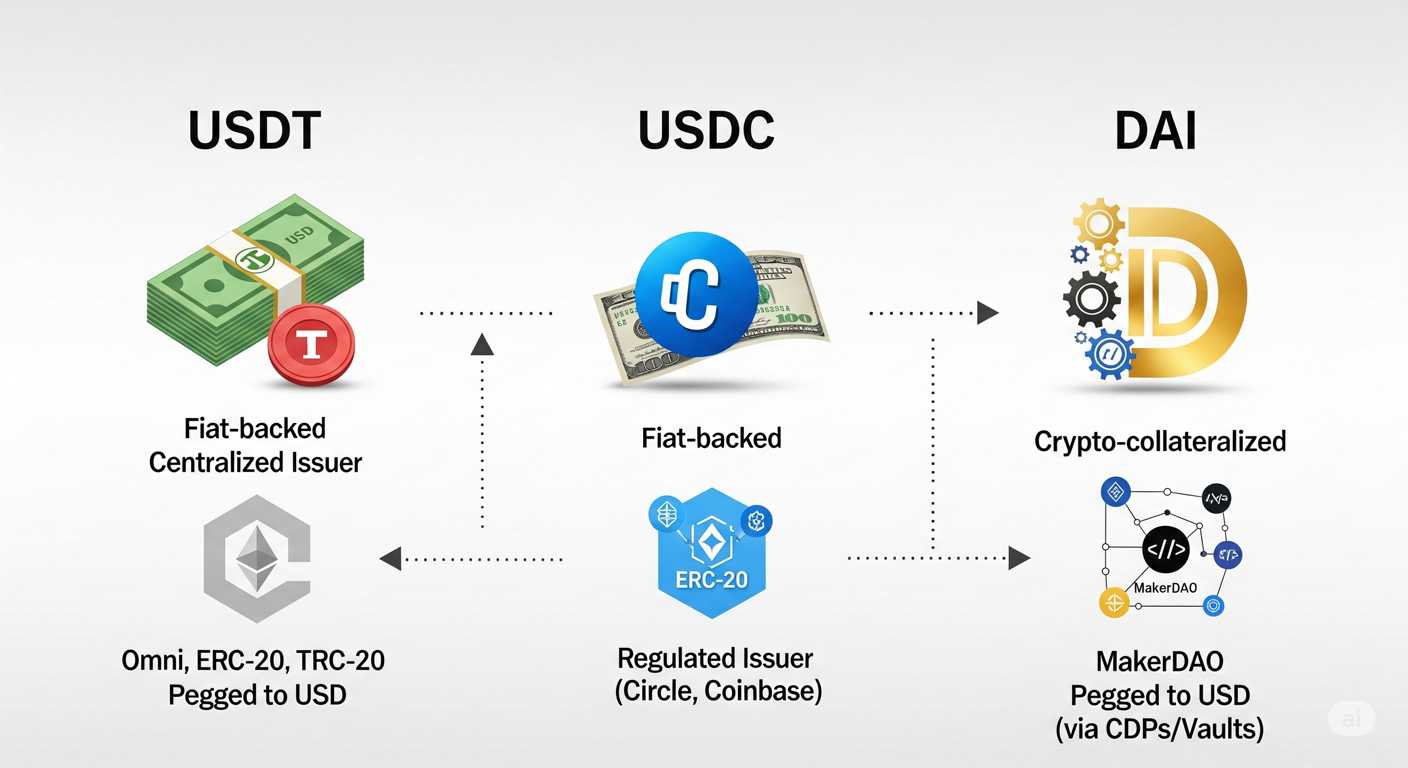
Launched in 2014, Tether remains the largest and most widely used stablecoin. It operates across multiple blockchains and is primarily backed by USD reserves and short-term investments. Tether’s scale has made it a backbone of crypto liquidity, though it has also faced scrutiny over transparency and reserve composition.
USDC (USD Coin)
Introduced by Circle and Coinbase in 2018, USDC is known for its regular third-party attestations and focus on compliance. It is fully backed by US dollar reserves held at regulated financial institutions and is popular among institutional users due to its perceived reliability.
DAI
DAI is a decentralized, crypto-collateralized stablecoin created by MakerDAO. Unlike fiat-backed stablecoins, DAI exists entirely on-chain and is backed by a mix of assets such as Ethereum, USDC, and other tokenized collateral. It’s a cornerstone of DeFi lending and borrowing protocols.
Interoperability Across Blockchains
Stablecoins are increasingly issued on multiple blockchains, enhancing their accessibility and reducing network congestion. For example, USDT exists on Ethereum (ERC-20), Tron (TRC-20), and Solana (SPL). This multi-chain approach allows users to choose networks based on transaction fees and speed.
Bridging Solutions
Cross-chain bridges facilitate the transfer of stablecoins between networks, though they introduce security considerations. Wrapped tokens and liquidity networks like Wormhole or Multichain play an important role in enabling interoperability.
Stablecoin Tokenomics
Tokenomics refers to the economic structure of a token—its issuance schedule, supply limits, and underlying incentives. While fiat-backed stablecoins aim for 1:1 issuance tied to reserves, crypto-collateralized and algorithmic models have more dynamic supply mechanics.
Supply Expansion and Contraction
Algorithmic stablecoins adjust supply based on demand. For example, if the price rises above $1, the system mints new tokens to increase supply; if the price falls below $1, it burns tokens or incentivizes users to lock them away.
Revenue Models
Stablecoin issuers generate revenue through interest on reserve assets, transaction fees, and in some cases, protocol-level fees in DeFi integrations. This revenue supports operations, audits, and platform development.
Stablecoins in Decentralized Finance (DeFi)
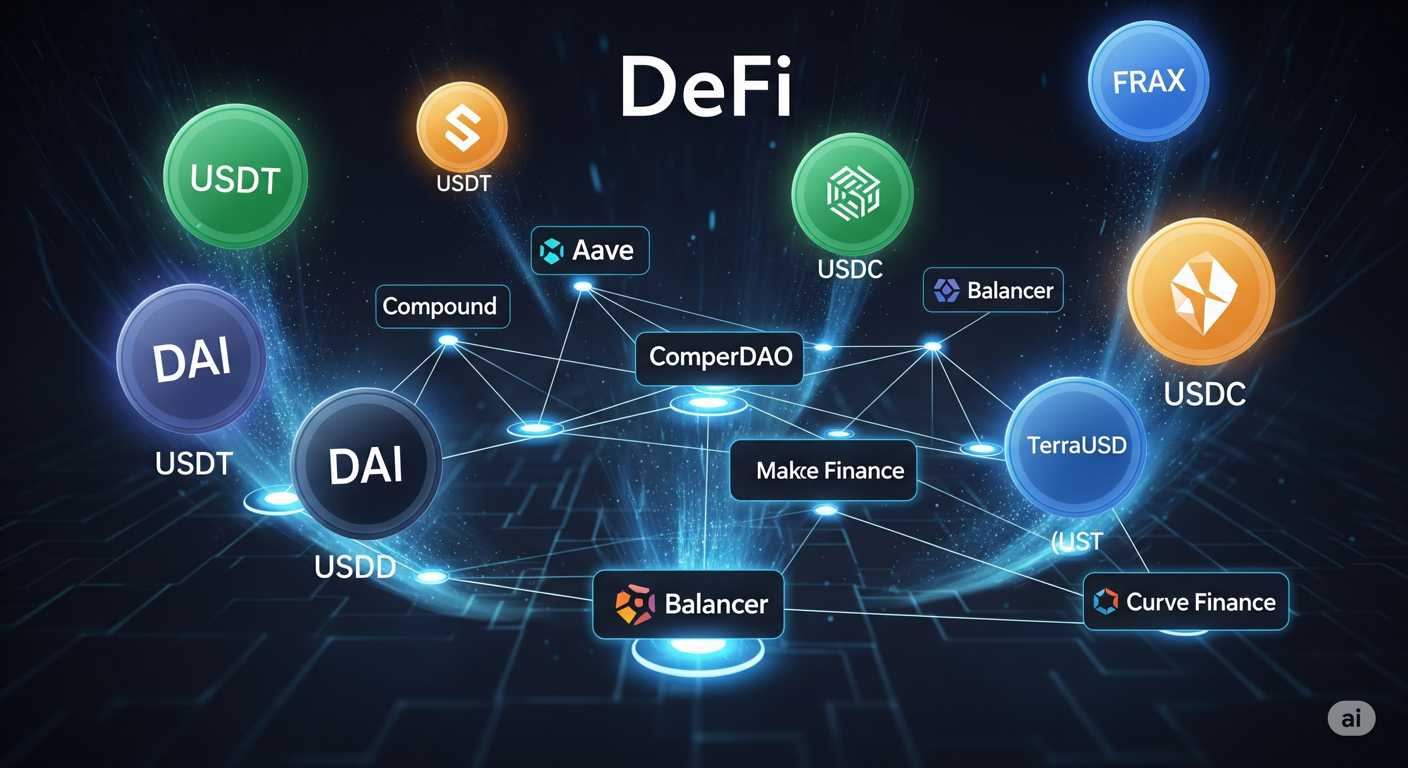
DeFi has amplified the importance of stablecoins, turning them into essential building blocks for lending markets, yield farming, and derivatives. Their predictable value allows for complex financial engineering without exposure to high volatility.
Lending and Borrowing
Platforms like Aave, Compound, and MakerDAO allow users to lend stablecoins for interest or borrow them by posting collateral. This has created decentralized money markets that operate without banks.
Liquidity Mining
Stablecoin liquidity pools often offer rewards in governance tokens, attracting users to provide stable assets for trading and lending protocols.
Derivatives and Synthetic Assets
Stablecoins are frequently used as collateral for creating synthetic assets—on-chain representations of stocks, commodities, or indices—enabling global, permissionless trading of real-world value proxies.
Corporate and Institutional Adoption
Enterprises are exploring stablecoins for payroll, treasury management, and settlement of global trade. Blockchain settlement speeds combined with currency stability offer significant operational advantages for cross-border business.
Payroll Systems
Some companies pay contractors in stablecoins to bypass slow and costly banking networks. Employees in countries with unstable local currencies often prefer receiving USD-pegged coins directly to their crypto wallets.
Corporate Treasury Use
Firms may hold stablecoins as part of their cash management strategy, particularly in industries requiring quick settlement in multiple jurisdictions. This allows for real-time capital mobility without the friction of traditional banking hours.
Infrastructure Providers
The stablecoin ecosystem is supported by infrastructure providers, including custodians, auditing firms, blockchain developers, and API service companies. These entities ensure operational stability, compliance with applicable standards, and integration with existing financial systems.
Custodians
Specialized custodians safeguard fiat reserves and sometimes digital collateral, ensuring that backing assets are secure and auditable.
Auditors and Attestors
Third-party firms conduct regular attestations or audits of stablecoin reserves, offering transparency to the public and institutional investors.
API and Payment Integrators
Companies providing payment APIs bridge the gap between stablecoins and point-of-sale systems, enabling merchants to seamlessly accept digital payments in stable assets.
Market Impact and Transaction Volume
Stablecoins now facilitate trillions of dollars in annual transaction volume, rivaling or even surpassing some traditional payment systems in raw throughput. Their constant presence on trading charts reflects their central role in liquidity provision, hedging strategies, and capital movement.
On-Chain Activity
Block explorers for Ethereum, Tron, and Binance Smart Chain often show stablecoins as the most transferred tokens by volume, underscoring their role as the primary transactional currency in crypto.
Institutional Trading Desks
For professional traders, stablecoins simplify settlement, reduce counterparty risk, and enable 24/7 global trading without dependence on traditional banking cut-off times.
The Origins of Stablecoin Technology
When Bitcoin launched in 2009, it was hailed as a decentralized, censorship-resistant currency. However, its price swings—sometimes exceeding 10% in a single day—made it unsuitable for use as a stable medium of exchange. This volatility created friction for merchants, payroll services, and institutional traders who needed predictable value over time. Stablecoins were introduced as a bridge between the efficiency of blockchain transactions and the stability of traditional fiat currencies like the US dollar or euro.
By pegging their value to an external reference, stablecoins aimed to provide a digital currency that could be transacted and stored without the anxiety of unpredictable price changes. This innovation quickly became integral to crypto exchanges, decentralized finance (DeFi), and cross-border payments.
Core Principles Behind Stablecoins
At the heart of stablecoin design are mechanisms that maintain their peg to a target value. This peg can be achieved through different strategies—each with unique technical and economic implications. In all cases, the objective is the same: to combine the programmability of blockchain with the value consistency of established currencies or assets.
Value Pegging
Stablecoins are pegged to various assets, most commonly:
- Fiat currencies such as USD, EUR, or GBP.
- Commodities like gold or oil.
- Other cryptocurrencies (used in some algorithmic designs).
On-Chain Transparency
Most stablecoins operate on public blockchains like Ethereum, Tron, or Binance Smart Chain, enabling transparent verification of transactions. For collateral-backed coins, on-chain proof of reserves—or off-chain attestations—play a critical role in maintaining market trust.
Types of Stablecoins
Stablecoins can be categorized based on how they maintain price stability. Understanding these categories is essential for anyone evaluating their use in trading, payments, or DeFi applications.
Fiat-Collateralized Stablecoins
These stablecoins are backed 1:1 by reserves held in traditional bank accounts or custodial institutions. For every unit issued, an equivalent value in fiat currency is stored by a trusted custodian.
| Example | Backing Asset | Blockchain |
|---|---|---|
| USDT (Tether) | USD Reserves | Ethereum, Tron, Solana |
| USDC (USD Coin) | USD Reserves | Ethereum, Algorand, Stellar |
| BUSD (Binance USD) | USD Reserves | Binance Smart Chain, Ethereum |
Fiat-collateralized stablecoins are relatively simple in design but rely heavily on centralized entities for reserve management. External audits or attestations—often provided by accounting firms—are critical to maintaining user confidence.
Crypto-Collateralized Stablecoins
These stablecoins are backed by other cryptocurrencies rather than fiat. Because crypto assets are volatile, they are usually overcollateralized to absorb price fluctuations. For example, to mint $100 worth of a crypto-collateralized stablecoin, you might need to lock $150 worth of Ethereum in a smart contract.
One of the most prominent examples is DAI, which is generated through the Maker Protocol and backed by a variety of crypto assets. Collateral ratios and liquidation mechanisms are enforced by smart contracts, ensuring the system’s solvency.

Algorithmic Stablecoins
Algorithmic stablecoins attempt to maintain their peg without physical reserves. Instead, they use algorithms and smart contracts to adjust the coin’s supply based on market conditions. If the price rises above the peg, new coins are minted; if it falls below, coins are bought back or burned. These systems aim for decentralization but have historically faced challenges during extreme market stress.
Key Use Cases
Stablecoins are not merely tools for traders—they underpin an increasing share of global crypto transactions. Their roles range from payment solutions to collateral in complex DeFi ecosystems.
Exchange Settlement
Stablecoins act as a common settlement currency across exchanges, eliminating the need for constant fiat conversions. This allows traders to move capital between platforms without banking delays or costly wire transfers.
Cross-Border Payments
By leveraging blockchain networks, stablecoins enable near-instant settlement of international transfers at a fraction of the cost of traditional systems like SWIFT. This has made them popular for remittances and B2B payments in emerging markets.
Decentralized Finance (DeFi)
Stablecoins serve as collateral for lending platforms, liquidity pools, and yield farming strategies. In DeFi, they provide a predictable unit of account, making it possible to calculate returns without constant recalculation due to asset volatility.
Technical Infrastructure
The operation of a stablecoin involves multiple layers of infrastructure—blockchain platforms, smart contracts, custodial services, and compliance systems. Each layer contributes to the coin’s stability, security, and accessibility.
Blockchain Platforms
Most stablecoins are issued as tokens on existing blockchains rather than operating their own. Ethereum’s ERC-20 standard dominates the market, but other networks like Solana, Tron, and Stellar offer faster transaction speeds and lower fees.
Smart Contracts
In the case of decentralized stablecoins, smart contracts handle issuance, redemption, collateral management, and liquidation. Their code is often open-source, allowing public review and independent audits for transparency.
Reserve Management
For fiat-backed stablecoins, off-chain reserves are managed by banks or trust companies. Transparency reports or attestations are typically published to reassure users that the backing assets exist and are not encumbered.
Historical Development
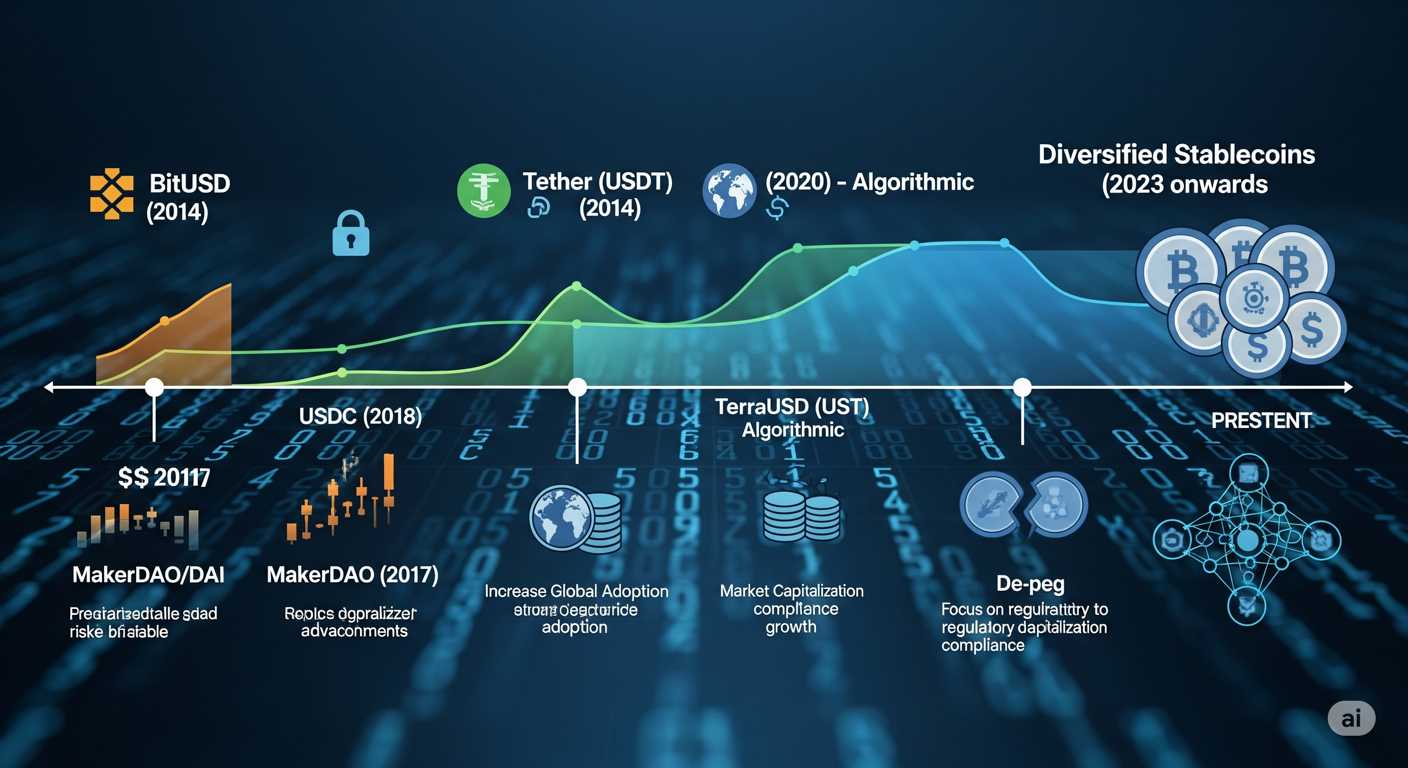
The stablecoin landscape has evolved rapidly since the launch of Tether in 2014. What began as a niche solution for traders has expanded into a core component of the digital asset market. The rise of USDC in 2018 brought greater emphasis on regulatory compliance and institutional adoption, while decentralized alternatives like DAI pushed the boundaries of on-chain financial engineering.
By 2020, stablecoins had become a major source of liquidity in crypto markets, with total supply surpassing $20 billion. This figure grew exponentially alongside the DeFi boom and increased institutional interest in blockchain-based payment rails.
Integration with Payment Systems
Stablecoins are increasingly being integrated into mainstream payment platforms, enabling users to spend them directly for goods and services. Payment processors and crypto-friendly merchants accept them alongside traditional methods, often using APIs that automatically convert stablecoins into local currency at the point of sale.

Merchant Adoption
For merchants, stablecoins reduce exposure to crypto volatility while preserving the benefits of blockchain settlement—such as low transaction fees and global reach. APIs and plugins for popular e-commerce platforms have accelerated this adoption.
Peer-to-Peer Transfers
In regions with unstable local currencies, peer-to-peer transfers in stablecoins can serve as an alternative to volatile fiat. These transactions often occur via mobile wallets, bypassing the need for bank accounts altogether.