


 All news is rigorously fact-checked and reviewed by leading blockchain experts and seasoned industry insiders.
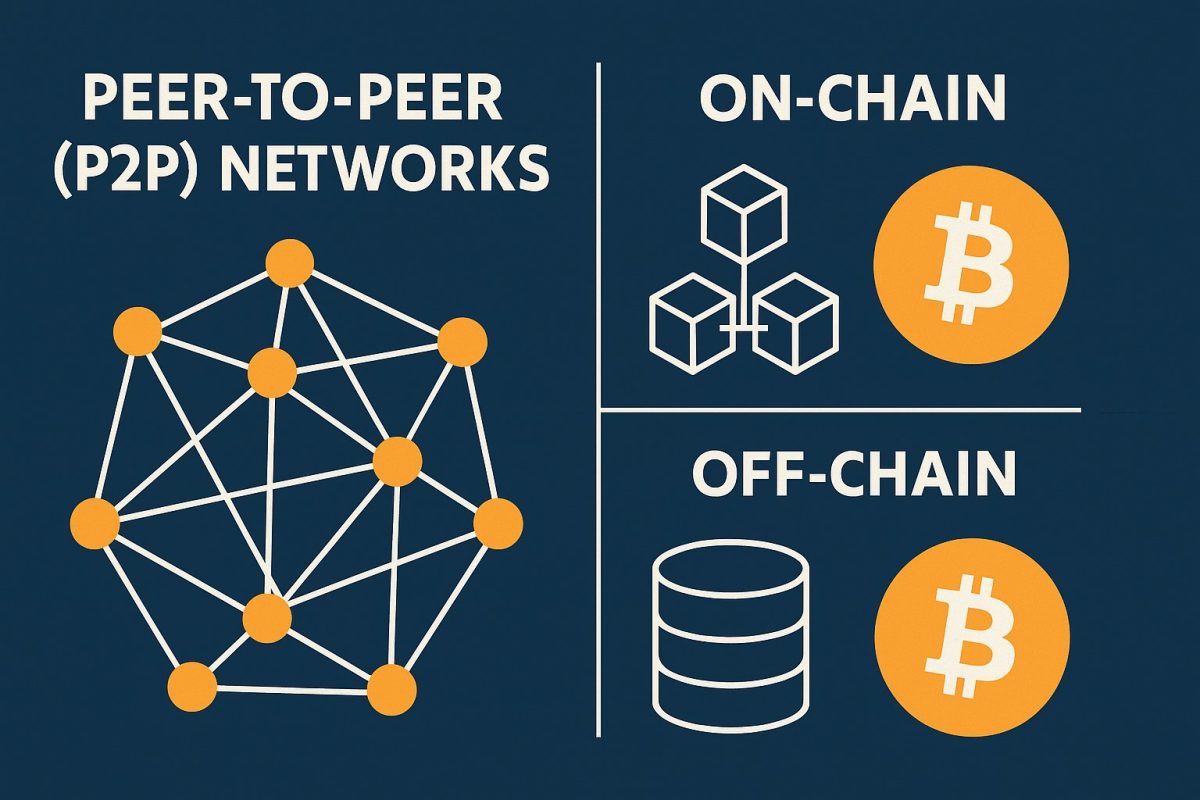
Peer-to-Peer (P2P) networks and the distinction between on-chain and off-chain transactions emerged to address inefficiencies, bottlenecks, and scalability limitations in early digital systems, enabling decentralized value exchange and secure data transfer without dependency on central intermediaries.
The Origins and Purpose of Peer-to-Peer Networks
Before the rise of P2P systems, most online communication and data exchange relied on centralized servers, which created single points of failure and bottlenecks. In the late 1990s and early 2000s, early implementations such as file-sharing platforms demonstrated that a distributed model could offer greater resilience, redundancy, and user autonomy.
This architectural approach later became critical for blockchain networks, where trustless peer-to-peer communication ensures that transactions are verified without relying on a single authority.

In cryptocurrency ecosystems, P2P networks allow participants to send and receive transactions directly, bypassing banks or centralized exchanges. This design ensures that every node in the network contributes to maintaining the ledger, preventing censorship and preserving transparency.
| Fact | Description |
|---|---|
| P2P Network Definition | Peer-to-Peer networks allow direct data exchange between participants (nodes) without relying on central servers, increasing resilience and reducing single points of failure. |
| Blockchain Dependence on P2P | Cryptocurrency blockchains like Bitcoin and Ethereum rely on P2P communication to relay transactions, validate blocks, and maintain a shared ledger. |
| Node Functionality | Each node acts as both client and server, capable of sending, receiving, validating, and storing blockchain data. |
| On-Chain Transactions | Transactions recorded directly on the blockchain, offering immutability, transparency, and security through consensus mechanisms. |
| Off-Chain Transactions | Transactions settled outside the blockchain, later reconciled or anchored to it, enabling faster and cheaper processing. |
| On-Chain vs. Off-Chain Speed | On-chain transactions depend on block times and are slower, while off-chain can achieve near-instant settlement. |
| Security Models | On-chain is secured by blockchain consensus (e.g., PoW, PoS), while off-chain security varies, often relying on trusted third parties or cryptographic proofs. |
| Architectural Variations | Blockchain P2P networks can be unstructured, structured, or hybrid, each affecting efficiency, latency, and fault tolerance. |
How Peer-to-Peer Networks Work
At the core of a P2P network is the principle that each participant, or “node,” functions both as a client and a server. This means each node can initiate requests, process incoming data, and share resources. In blockchain networks like Bitcoin and Ethereum, nodes perform the following functions:
- Transaction Relay – Broadcasting and receiving transactions from other nodes.
- Block Validation – Verifying new blocks based on the network’s consensus rules.
- Ledger Storage – Maintaining a complete or partial copy of the blockchain.
- Consensus Participation – Helping determine which version of the ledger is accepted.
Because the network is decentralized, even if some nodes go offline, the system continues to operate, as data is replicated across multiple independent participants.
Key Components of a P2P Network
| Component | Description |
|---|---|
| Nodes | Devices connected to the network that store, validate, and relay data. |
| Protocols | Rules and formats for communication, ensuring compatibility between nodes. |
| Consensus Mechanism | The method used to agree on the state of the ledger, such as Proof of Work or Proof of Stake. |
| Peer Discovery | Processes for finding and connecting to other active nodes in the network. |
| Data Propagation | How information such as transactions and blocks spreads across the network. |
Evolution of P2P in Blockchain
When Satoshi Nakamoto introduced Bitcoin in 2009, the design relied heavily on a P2P model to enable direct transactions without intermediaries. This structure proved that financial networks could be decentralized, transparent, and self-sustaining. Later blockchain systems such as Ethereum expanded the concept by adding programmable smart contracts, allowing for complex decentralized applications (dApps) to run entirely on a P2P infrastructure.
In practice, P2P networks in blockchain are designed for resilience and censorship resistance. They distribute transaction verification across thousands of geographically dispersed nodes, making it extremely difficult for any single entity to alter the ledger or halt operations.
On-Chain vs. Off-Chain Transactions: The Structural Divide
Within cryptocurrency, the flow of transactions can occur either on-chain—directly recorded on the blockchain—or off-chain—settled outside the blockchain but often anchored to it later. The distinction is fundamental to understanding how scalability, privacy, and transaction costs are managed in decentralized ecosystems.
On-Chain Transactions
On-chain transactions are executed directly on the blockchain, meaning they are included in a block and permanently recorded in the distributed ledger. This process involves:
- Broadcasting the transaction to the P2P network.
- Verification by multiple nodes following the consensus rules.
- Inclusion in a mined or validated block.
- Permanent storage in the blockchain history.
Because every node maintains a copy of the ledger, on-chain transactions are immutable once confirmed. However, they are subject to block confirmation times and network fees.

Off-Chain Transactions
Off-chain transactions occur outside the blockchain but are later reconciled with it, or rely on trusted mechanisms to ensure settlement. They are widely used to address scalability and cost issues, allowing high transaction volumes without overloading the main chain. Examples include:
- Payment Channels – Systems like the Lightning Network where transactions happen off-chain and are later settled on-chain.
- Custodial Transfers – Transfers between accounts within a centralized exchange’s internal ledger.
- Sidechains – Independent blockchains pegged to a main chain, enabling faster processing with later synchronization.
These methods can dramatically reduce costs and increase speed, though they depend on different trust and security models compared to purely on-chain methods.
Why the Distinction Matters in Cryptocurrency
The choice between on-chain and off-chain processing impacts throughput, transaction fees, settlement speed, and privacy. Traders and developers must assess which approach aligns with their operational needs. While on-chain transactions guarantee transparency and immutability, off-chain methods provide efficiency and scalability for applications that require high-volume processing.
Comparative Overview
| Attribute | On-Chain | Off-Chain |
|---|---|---|
| Settlement | Immediate on ledger | External, later reconciled |
| Transparency | Fully transparent on blockchain | Depends on operator or protocol |
| Speed | Slower, depends on block times | Faster, near-instant possible |
| Cost | Requires network fees | Often low or negligible |
| Security Model | Secured by blockchain consensus | Varies; can involve trusted parties |
The Role of Consensus in P2P and Transaction Types
Consensus mechanisms—such as Proof of Work (PoW) and Proof of Stake (PoS)—determine how nodes agree on the state of the blockchain. In on-chain operations, consensus ensures that every confirmed transaction is agreed upon by a majority of nodes. In off-chain environments, consensus may involve cryptographic proofs or trusted validators to assure participants of settlement integrity.
For example, in the Bitcoin network, PoW ensures that only valid transactions are included in blocks, preventing double spending. In contrast, the Lightning Network (off-chain) uses smart contracts and multi-signature arrangements to guarantee that parties can settle disputes on-chain if necessary.
Architectural Models of P2P in Blockchain
P2P networks are not monolithic; their architectures vary depending on design goals. In blockchain, three primary models emerge:
Unstructured P2P Networks
Nodes connect randomly without a predefined topology. While flexible and fault-tolerant, they can be inefficient in finding data. Bitcoin’s gossip protocol is a prime example.
Structured P2P Networks
Nodes are organized in a specific topology, often using Distributed Hash Tables (DHTs). This model enables efficient lookups and is common in certain blockchain indexing systems.
Hybrid P2P Networks
Combine elements of centralized coordination with decentralized data exchange. Some layer-2 and scaling solutions adopt this to balance speed with resilience.
P2P Data Propagation and Network Efficiency
In blockchain P2P systems, data propagation refers to how quickly and reliably information—such as new transactions or blocks—spreads across the network. The goal is to ensure that all honest nodes receive updates before the next block is mined or validated. This is critical for preventing forks, reducing orphaned blocks, and maintaining synchronization.
Data propagation typically follows the gossip protocol, where each node relays information to a subset of its peers, who then relay to others, rapidly achieving network-wide distribution. While efficient, this method can also introduce redundant data transmission, which developers attempt to optimize through techniques like:
- Compact Block Relay – Sending only the block header and missing transactions rather than the full block.
- Transaction Aggregation – Bundling multiple transactions for transmission efficiency.
- Peer Prioritization – Selecting peers with low latency connections for faster propagation.
Interaction Between On-Chain and Off-Chain Layers
In practice, the cryptocurrency ecosystem often blends on-chain and off-chain mechanisms to balance security, cost, and scalability. A decentralized application (dApp) may execute core settlement on-chain to leverage the blockchain’s security guarantees while shifting high-frequency or data-heavy operations off-chain to avoid congestion.
Case Study: Bitcoin Lightning Network
The Lightning Network is a widely known example of a hybrid approach. Participants open payment channels on-chain, which serve as gateways for multiple rapid off-chain transfers. Once finished, the final state is settled back to the blockchain. This design:
- Preserves on-chain immutability for final settlement.
- Enables thousands of microtransactions without incurring individual fees.
- Reduces strain on the base layer, improving scalability.
Case Study: Ethereum Layer-2 Rollups
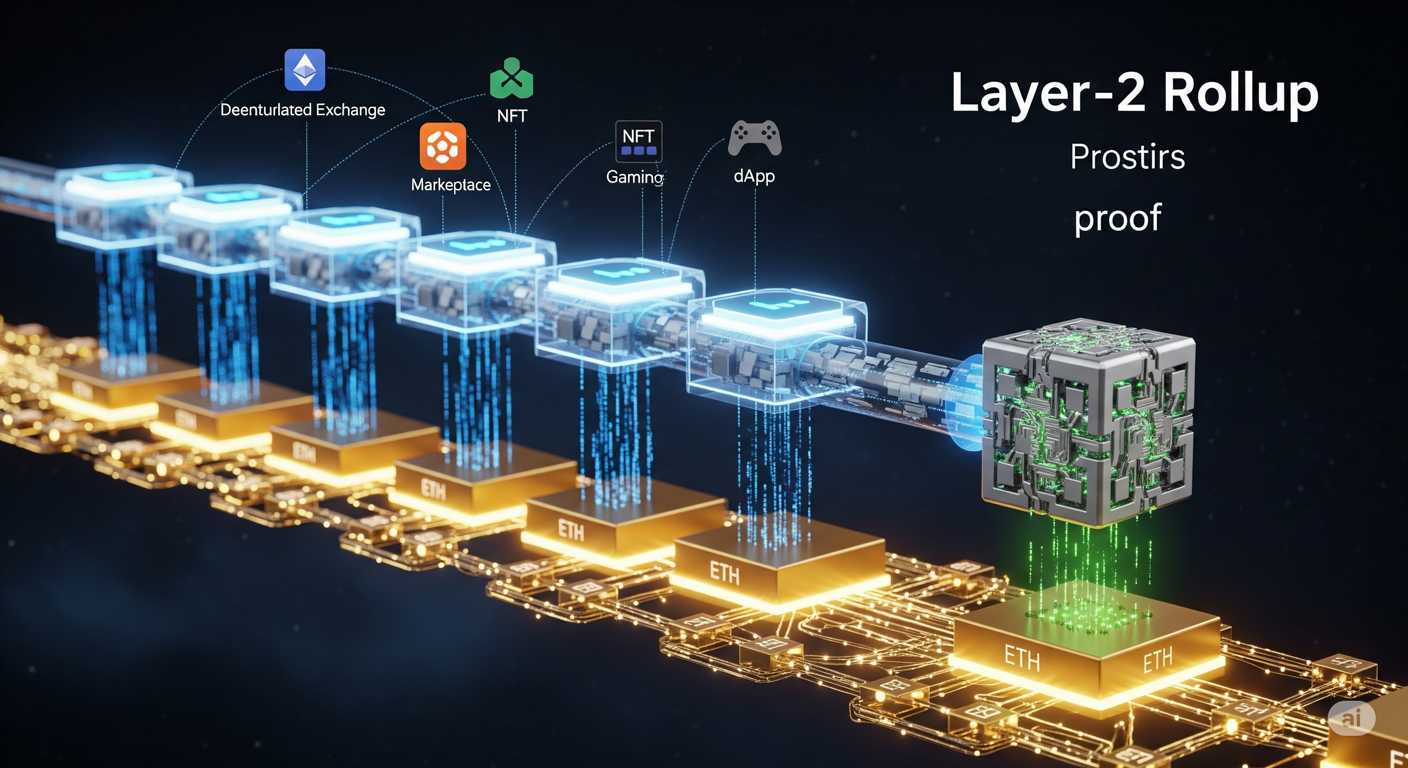
Ethereum rollups execute transactions off-chain but post cryptographic proofs on-chain. Optimistic rollups and zero-knowledge (ZK) rollups differ in verification methods, but both reduce gas costs while anchoring security to the main Ethereum chain.
P2P Network Security in Blockchain Context
P2P networks are foundational to blockchain’s resistance against centralized control, but their security depends on robust cryptographic design, node diversity, and active monitoring. Key elements include:
- Public-Key Cryptography – Ensuring only authorized parties can sign transactions.
- Transaction Verification – Rejecting invalid transactions at the node level before they can propagate.
- Sybil Resistance – Using consensus rules or economic costs to prevent one entity from creating numerous fake nodes to influence the network.
- Data Integrity Checks – Hashing and Merkle tree structures to verify that data remains unchanged.
In on-chain environments, consensus mechanisms prevent double spending and maintain a single version of truth. In off-chain contexts, security may hinge on multi-signature arrangements, time-locked contracts, or cryptographic commitments that can be enforced on-chain if needed.
Node Types and Roles in P2P Blockchain Networks
Not all nodes in a blockchain network perform the same functions. The diversity of node types enhances network robustness and operational flexibility.
| Node Type | Primary Function | Relation to On-Chain/Off-Chain |
|---|---|---|
| Full Node | Maintains a complete copy of the blockchain, validates all transactions and blocks. | Critical for on-chain consensus and ledger integrity. |
| Light Node | Stores only block headers, relying on full nodes for transaction data. | Supports on-chain verification with reduced storage needs. |
| Mining/Validator Node | Proposes new blocks and participates in consensus. | Exclusive to on-chain transaction finalization. |
| Relay Node | Specialized in fast data propagation across regions. | Supports both on-chain and off-chain communication. |
| Off-Chain Service Node | Manages payment channels, rollup aggregations, or custodial ledgers. | Dedicated to off-chain transaction handling. |
Synchronization in P2P Blockchain Networks
Synchronization ensures that all participating nodes have a consistent view of the blockchain ledger. In on-chain systems, this involves downloading and validating blocks in the correct order. In off-chain systems, synchronization may involve updating channel states or ensuring that secondary ledgers reflect the latest agreed balances.
Initial Block Download (IBD)
When a new node joins a blockchain network, it must download the entire blockchain from peers and verify it block by block. This process is resource-intensive but essential for security.
State Synchronization in Layer-2
Off-chain solutions often rely on state snapshots to ensure quick recovery and verification. For example, rollup aggregators regularly commit a compressed version of their state to the main chain for reference.
Scalability Considerations
One of the main reasons for leveraging off-chain methods alongside P2P on-chain networks is scalability. As blockchain adoption grows, base layers can become congested, driving up transaction fees and slowing confirmations. Off-chain techniques alleviate this by moving computation and data storage away from the main chain while retaining a security link.
Sharding as a P2P Scaling Method
Sharding involves splitting the blockchain into multiple smaller chains (shards) that operate in parallel, each handling a portion of the transaction load. This approach can be considered an on-chain scaling solution but still relies on P2P communication between shard validators.
Application Scenarios in Cryptocurrency
Understanding where and how to apply on-chain or off-chain methods is essential for various use cases:
- High-Value Settlements – On-chain for immutability and transparency.
- Microtransactions – Off-chain for speed and minimal fees.
- DeFi Protocol Execution – Hybrid, with smart contracts on-chain and order-matching off-chain.
- Cross-Border Remittances – Often start off-chain for rapid delivery and finalize on-chain for security.
Data Privacy in On-Chain vs. Off-Chain
While blockchain transparency is a defining feature, it can conflict with privacy needs. On-chain transactions are visible to all participants, while off-chain systems can offer selective disclosure. Zero-knowledge proofs and confidential transactions are cryptographic techniques used to bridge this gap, enabling privacy-preserving on-chain operations.
Confidential Transactions
These use cryptographic commitments to hide transaction amounts while still allowing validation. Though on-chain, they mimic some privacy aspects of off-chain methods.
Zero-Knowledge Rollups
Rollups can use zero-knowledge proofs to verify off-chain execution without revealing underlying transaction data.
Real-World Infrastructure Examples
- Bitcoin Mainnet – Purely on-chain for final settlements.
- Lightning Network – Off-chain payment channel network for Bitcoin.
- Ethereum Mainnet – On-chain execution of smart contracts.
- Arbitrum / Optimism – Off-chain computation with on-chain security for Ethereum.
- Polygon PoS Chain – A sidechain with P2P architecture linked to Ethereum.
Technical Challenges in P2P Synchronization of Mixed Transaction Types
When systems integrate both on-chain and off-chain methods, coordination becomes complex. Nodes must manage multiple data sources, verify cross-layer proofs, and handle disputes efficiently. This often requires:
- Cross-chain bridges with proof verification.
- Smart contracts to enforce off-chain agreements.
- Specialized indexers to track both on-chain and off-chain states.
As P2P and blockchain ecosystems evolve, these architectures continue to be refined to meet demands for speed, security, and global accessibility.