
 All news is rigorously fact-checked and reviewed by leading blockchain experts and seasoned industry insiders.
Table of Contents
- What is Shiba Inu?
- From Meme Coin to Ecosystem
- Origins, Anonymity and Early Momentum
- Technology: Shibarium and ShibaSwap
- Community, Partners and Global Merchant Adoption
- Use Cases: Payments, DeFi, Gaming and Metaverse
- SHIB Tokenomics at a Glance
- Current Developments 2025 and Outlook
- FAQ: Your Unanswered Questions About Shiba Inu
What is Shiba Inu?
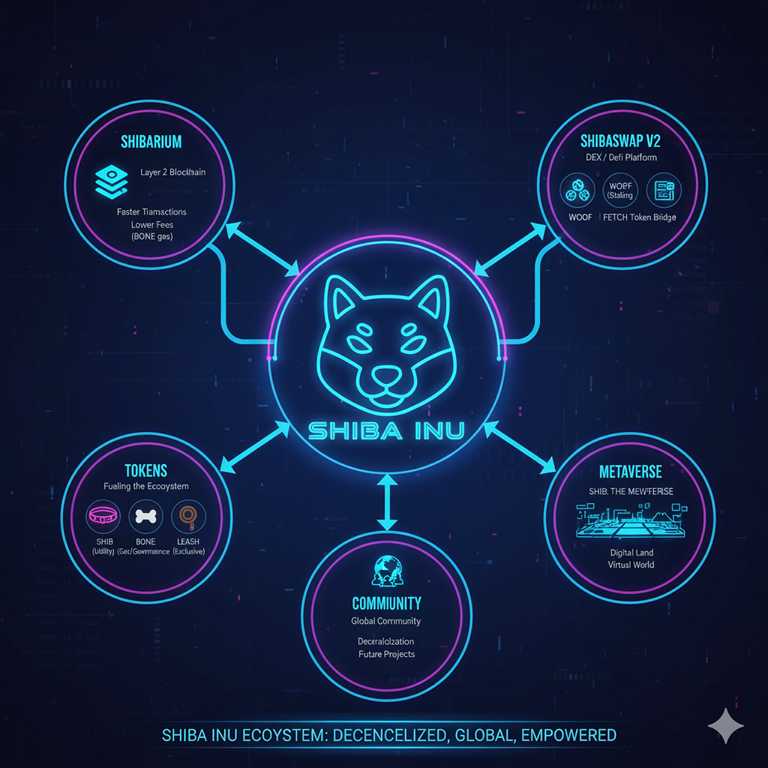
Launched in 2020 on the Ethereum blockchain, Shiba Inu started as a meme coin but quickly developed into a broader ecosystem. Initially labeled as the “Dogecoin Killer,” SHIB has since evolved into a cryptocurrency supported by a growing toolkit: the decentralized exchange ShibaSwap, the Layer-2 blockchain Shibarium, NFT projects, and even a Metaverse initiative. Today, Shiba Inu represents a community-driven crypto project with expanding technical foundations.
From Meme Coin to Ecosystem
Shiba Inu was founded in 2020 by the anonymous figure “Ryoshi.” Launched as an ERC-20 token, it leveraged Ethereum’s infrastructure and security. The project rapidly gained attention through social media, exchange listings, and its highly engaged online community — known as the ShibArmy. This community provided liquidity, built content, and supported developers, helping transform Shiba Inu from a simple meme into a project with real-world applications and ambitions.
Technology: Shibarium and ShibaSwap
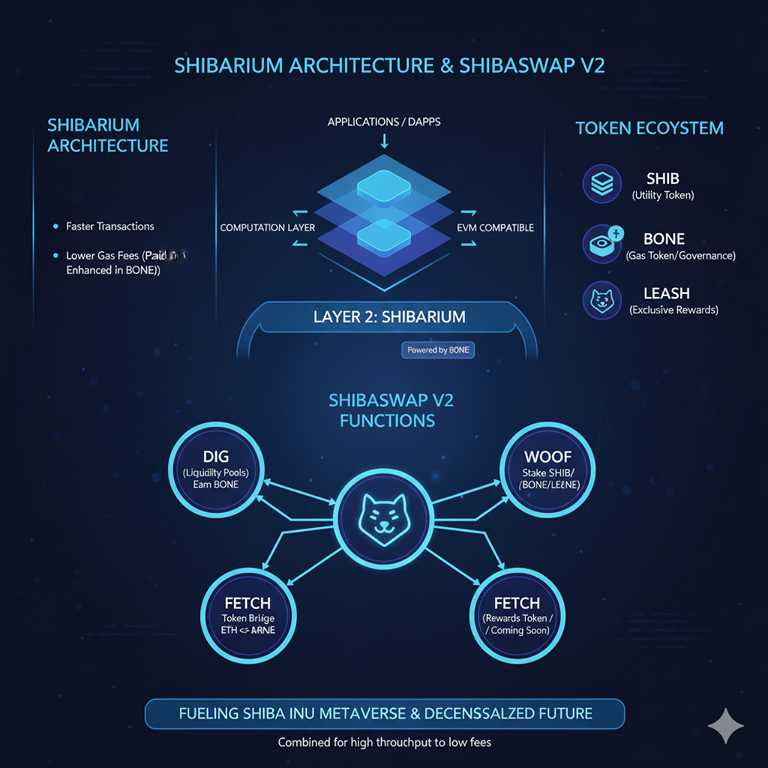
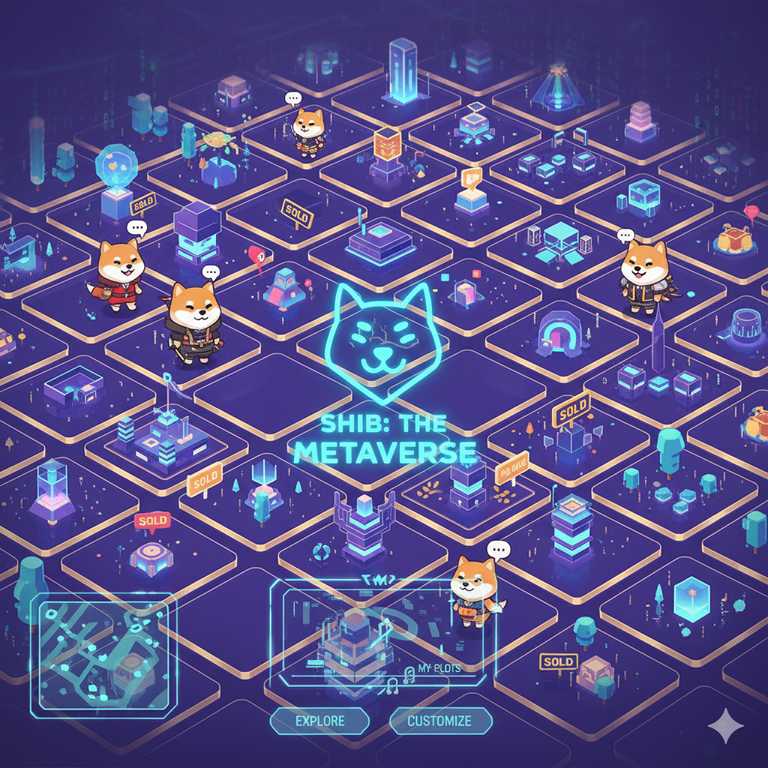
ShibaSwap functions as a decentralized exchange (DEX) for SHIB, LEASH, and BONE. Originally launched as a classic AMM, ShibaSwap v2 introduced concentrated liquidity and NFT-based positions across Ethereum and Shibarium. The Shibarium blockchain, built as a Layer-2 solution, enables faster and cheaper transactions. It is EVM-compatible, allowing developers to deploy dApps and tokens, while gas fees are paid in BONE. Additionally, Shiba Inu’s NFT collection (Shiboshis) and Shib: The Metaverse expand its use cases, covering staking, farming, and land-based virtual assets. Shibarium focuses on short confirmation times and high throughput, with particular use cases in DeFi, gaming, and payments.
Community, Partners and Global Merchant Adoption
The ShibArmy counts millions of global supporters, driving education, burn campaigns, and marketing efforts. Payment gateways have helped establish real-world usage. Through BitPay, SHIB is accepted at retailers such as Newegg and AMC. NOWPayments supports plugins, invoicing, and optional burn features for merchants, as well as crypto donations for NGOs. These integrations allow SHIB to be indirectly adopted across e-commerce and payment ecosystems.
| Sector | Partner | Use of SHIB |
|---|---|---|
| Payments | BitPay | Checkout, gift cards, donations |
| Payments / E-Commerce | Newegg, AMC | Retail acceptance via BitPay |
| Payment Processing | NOWPayments | Shop plugins, invoicing, optional burn |
| Nonprofit | NGOs via BitPay | Crypto donations in SHIB |
Wallets and Storage: A Beginner’s Orientation
You can hold SHIB in self-custody wallets (browser, mobile, hardware) or with a custodial provider. Self-custody gives you full control over keys; custodial accounts prioritize convenience. If you expect to use Shibarium or DeFi tools like ShibaSwap, a Web3 wallet (and basic familiarity with connecting dApps) is practical.
Beginner wallet setup (orientation)
- Create a wallet with a trusted provider and secure your recovery phrase offline.
- Fund your wallet with ETH (for Ethereum gas) and BONE (for Shibarium gas) if you plan to use both networks.
- Bridge assets to Shibarium only when you want to use Layer 2 apps.
Your One Checklist: Buy SHIB in 5 Clear Steps
- Choose a reputable platform that lists SHIB.
- Create your account and set up standard security (strong password, app-based 2FA).
- Deposit funds (fiat or crypto) according to your preference.
- Select SHIB, then place a market or limit order.
- Decide where to hold SHIB: keep it on the platform for convenience, or withdraw to your Web3/hardware wallet for hands-on control.
Tokenomics & Burning—What You Should Know
Shiba Inu began with a very large initial supply (famously in the quadrillions) and has seen significant burn activity over time, removing a portion of tokens from circulation. For you, the takeaway is that SHIB’s story includes both massive distribution and ongoing efforts to shape supply dynamics through burns and ecosystem engagement.
| Concept | Plain-English Explanation |
|---|---|
| Initial Supply | Launched with 1 quadrillion tokens; a major burn early in its history removed a substantial portion. |
| Ongoing Burns | Ecosystem and community processes may direct tokens to “burn” addresses, permanently taking them out of circulation. |
| Ecosystem Activity | Swaps, liquidity, and Layer 2 usage aim to deepen utility and reinforce the brand’s network effects. |
ShibaSwap: The Ecosystem’s DeFi Hub
ShibaSwap is where you swap tokens, add liquidity, and engage with staking-style features that reward participation. While the interface has its own terminology—“Dig” for liquidity, “Bury” for staking-style actions—the core idea is familiar: you connect a wallet, approve tokens, and interact with pools. If you’re new, start by browsing the interface with a small test amount to get used to approvals and transaction flows.
Key terms you’ll see
- Dig
- Add liquidity to a pool (pairing tokens) so others can swap; you earn a share of fees
—bury Staking-style
- action to lock tokens and earn rewards, with mechanics set by the platform.
- LP Tokens
- Tokens you receive when you add liquidity; they represent your pool share.
Community & Culture
Much of SHIB’s identity is community energy. You’ll see it in social channels, fan-made dashboards, and educational threads that distill what’s happening into approachable snippets. This matters for you because the project’s momentum has historically come from a mix of builder activity and grassroots participation—open-source tools, explainer videos, and visuals that keep new users in the loop.
How to stay in the flow
- Follow official ecosystem channels for updates on Shibarium and ShibaSwap.
- Bookmark a reliable analytics dashboard to track liquidity and on-chain activity.
- Try small transactions first to understand workflows before scaling up.
Simple Comparison: SHIB vs. DOGE vs. PEPE
For context, here’s a quick comparison with two other high-profile meme assets. This is not about value judgments—just a concise map so you can orient yourself quickly.
| Feature | SHIB (Shiba Inu) | DOGE (Dogecoin) | PEPE |
|---|---|---|---|
| Origin | Meme coin → expanded ecosystem | Early meme cryptocurrency | Internet meme token |
| Base Chain | Ethereum (ERC-20), plus Shibarium L2 | Own chain (Dogecoin network) | Ethereum (ERC-20) |
| Utility Focus | DeFi via ShibaSwap; L2 activity | Tipping/payments culture | Primarily speculative meme token |
| Gas Token (if any) | BONE on Shibarium | DOGE on Dogecoin | ETH (on Ethereum) |
Putting It All Together
You now have the essential mental model: SHIB as the community flagship, BONE as the enabler for governance and Shibarium gas, and LEASH as a limited-supply token for select perks. With ShibaSwap as the DeFi hub and Shibarium as the high-frequency lane, you can move from passive holding to active participation, using the tools that fit your pace.
Use Cases: Payments, DeFi, Gaming and Metaverse
- Payments: Merchants integrate SHIB via gateways, enabling customers to pay in crypto, with settlement in fiat or crypto.
- DeFi: ShibaSwap offers staking (“Bury”) and liquidity pools, rewarding users primarily in BONE.
- NFTs & Gaming: Shibarium supports asset management, trading, and gaming rewards.
- Metaverse: Users can buy and develop digital land plots for events, communities, and loyalty programs.
SHIB Tokenomics at a Glance
The original supply was 1 quadrillion SHIB. In 2021, Vitalik Buterin burned a significant portion of his allocated tokens and donated others to charitable projects. The ecosystem token trio consists of SHIB (main token), LEASH (limited supply), and BONE (governance and gas for Shibarium). Burn mechanisms range from community initiatives to fee-based conversions and merchant-supported burns. The goal is to reduce circulating supply over time, keeping tokenomics dynamic.
Current Developments 2025 and Outlook
In 2025, Shibarium expanded its developer onboarding and was listed in Chainlink’s CCIP directory. ShibaSwap v2 now spans both Ethereum and Shibarium. Payment providers refined integrations with optional burn features for merchants, while NFT and Metaverse initiatives advanced. The focus has shifted from hype to tangible utility, with increasing emphasis on practical adoption.